
CBRT Held its Key Rate at 37% on September 10 Due to Inflationary Risks
Central Bank of Turkiye (CBRT) held the policy rate constant at 37% during the MPC meeting on September 10 citing inflationary risks stemming from elevated energy prices, and recent volatility in financial markets. We expect stickiness in inflation will mostly remain in Q4 while the CBRT will likely trim the policy rate by 100 bps to 36% by the end of the year should easing geopolitical tensions in Iran provide sufficient space.
Bottom Line Up Front (BLUF): Central Bank of Turkiye (CBRT) held the policy rate constant at 37% during the MPC meeting on September 10 during the period of inflationary risks. CBRT stated in its written statement that despite elevate energy prices, recent volatility in financial markets and the turbulent backdrop of the global macroeconomy, leading indicators suggested that the underlying inflation trend has moderated since the last meeting in June. We expect stickiness in inflation will mostly remain in Q4 while the CBRT will likely trim the policy rate by 100 bps to 36% by the end of the year should easing geopolitical tensions in Iran provide sufficient space.
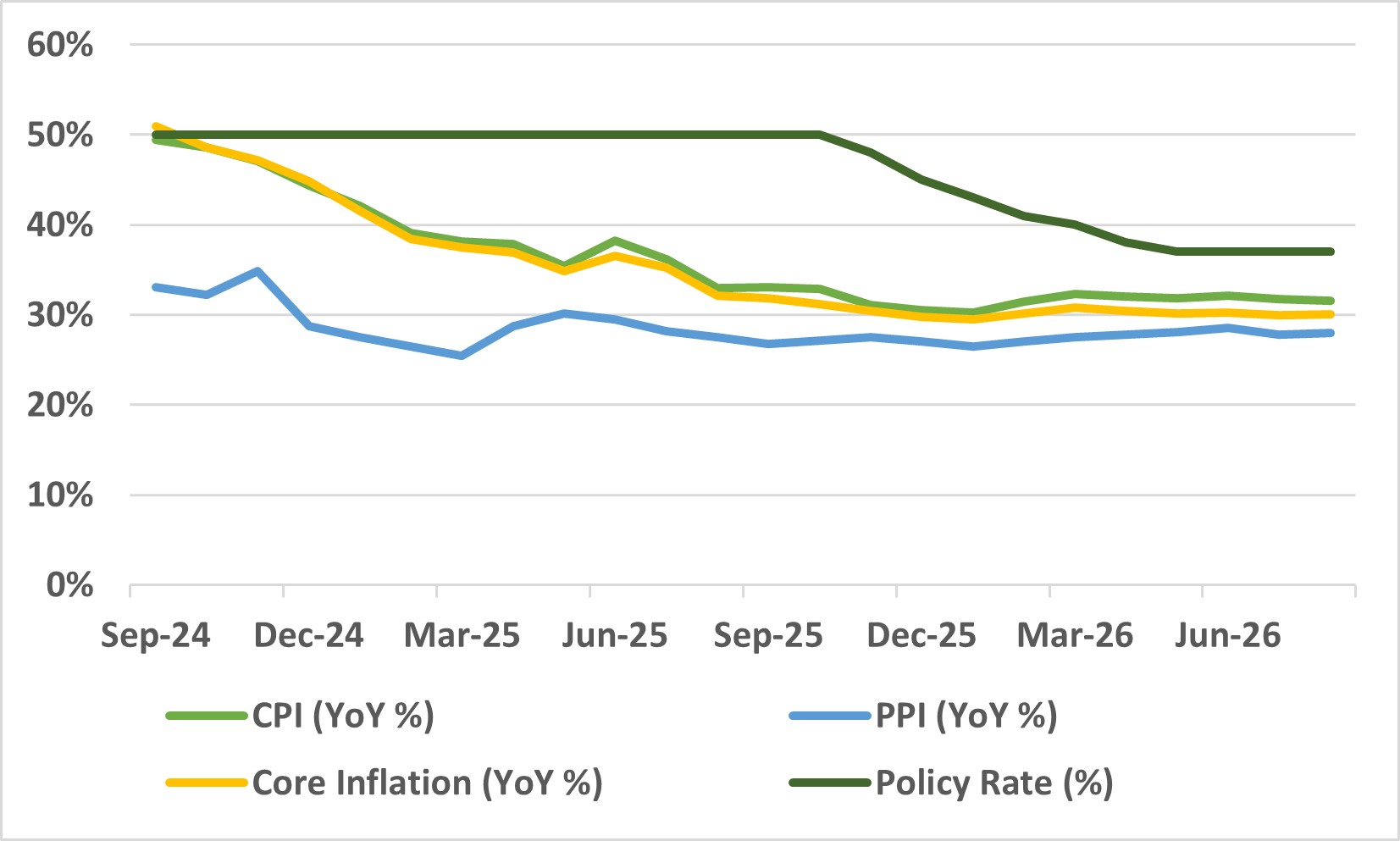
Figure 1: CPI, PPI, Core Inflation (YoY, % Change) and Policy Rate (%), September 2024 – August 2026
Source: IslamicMacro
Central Bank of Turkiye (CBRT) held the policy rate constant at 37% on September 10 for a fifth-straight meeting while the domestic economy remains under pressure from regional friction involving Iran, which sparked a surge in energy, transportation and agricultural input costs.
In its written MPC statement, the CBRT said that data on economic activity, as well as the limited pass-through of supply shocks to domestic prices confirm the weakness in domestic demand while elevated energy prices amid geopolitical developments pose an upward risk to the inflation outlook. (Note: The inflation stood at 31.5% in August driven primarily by elevated housing, education, and health costs. Despite the recently announced MTP (2027–2029) estimating inflation to fall to 28.4% by the end of 2026, and 21.0% in 2027, we forecast anticipate average headline inflation finishing the year with 29.5% as structural factors and price-setting rigidities persist).
It appears the ongoing conflict involving Iran remains a primary determinant for the Turkish economy. Considering fragile truce between the U.S./Iran continues to be tested recently and a spike in oil prices, the situation in Iran remains volatile and this continued instability poses a threat to the Turkish economy particularly given the country’s heavy reliance on energy imports.
We expect the CBRT to approach interest-rate adjustments with caution on a meeting-by-meeting basis, particularly given the conflict in Iran in Q4. Under these circumstances, both geopolitical uncertainties and domestic dynamics remain significant risks to the inflation outlook. We expect stickiness in inflation will mostly remain in Q4 while the CBRT will likely trim the policy rate by 100 bps to 36% by the end of the year should easing geopolitical tensions in Iran provide sufficient policy space. 2027 MPC decisions will likely be driven by the upcoming presidential elections which will likely take place late 2027/early 2028.
Disclaimer: This publication is provided for general informational and macroeconomic research purposes only. It does not constitute individualized investment, financial, legal, tax or other professional advice. Forecasts, opinions and analysis reflect the author’s professional judgment at the time of publication and are not guarantees of future outcomes. See our full Risk & Legal Disclaimer and Terms & Conditions.
Analyst / Author Declaration: I, Volkan Sezgin, Independent Analyst and Researcher, declare that the views and conclusions expressed in this publication reflect my professional judgment at the time of publication and are presented in good faith. The analysis has been prepared independently and without improper influence or inducement. Where applicable, material conflicts of interest are disclosed. I observe applicable professional and internal compliance standards concerning confidentiality, independence and the responsible use of information.