
Egypt - PolEcon Insights (October 2026)
We present updated Egypt PolEcon Insights for October 2026.
We present updated Egypt PolEcon Insights for October 2026. 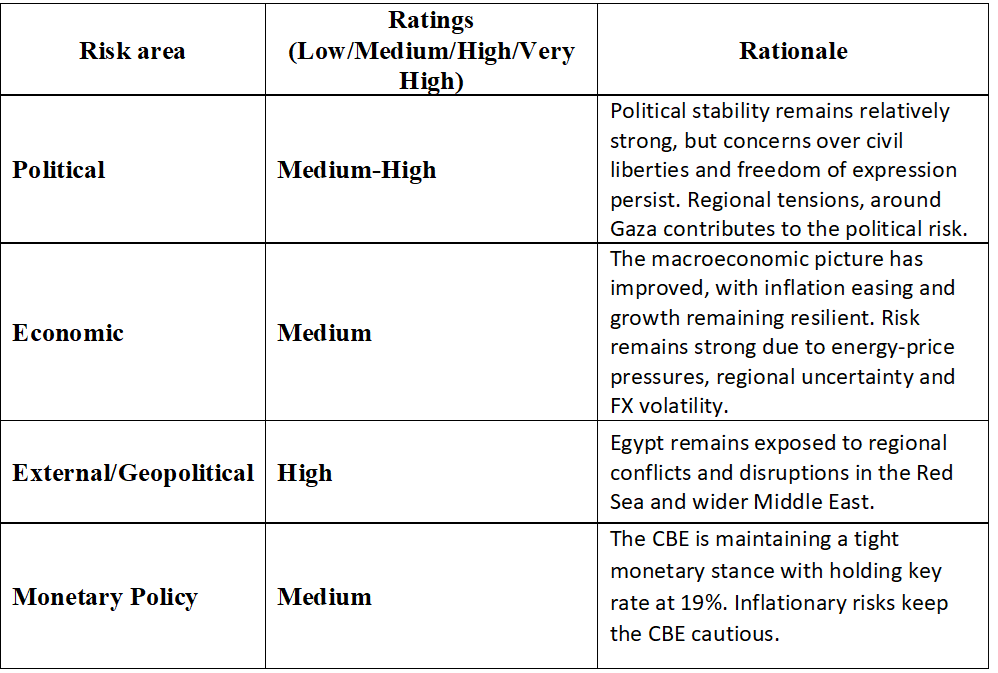
Risk Outlook
 Source: IslamicMacro
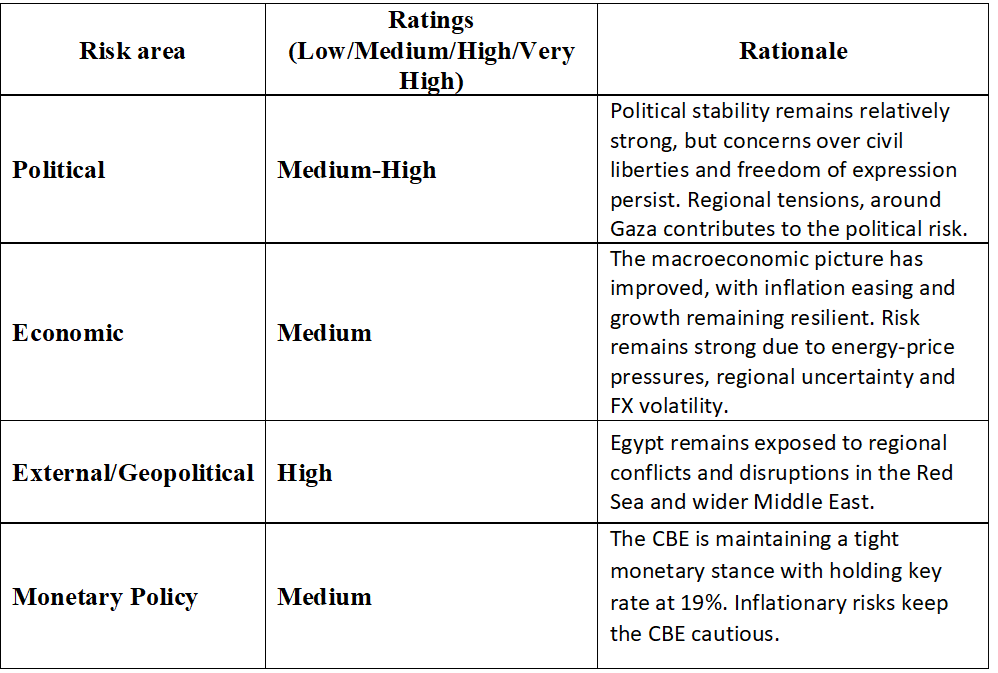
On the political side, the Egyptian government continues to face alleged international criticism over civil liberties and freedom of expression. Regionally, relations with Israel remain strained due to Gaza crisis. Although fragile truce helped reduce some of the pressure, we think any major flare-up in Gaza or the West Bank could trigger domestic tensions.
On the external side, Egypt remains exposed to developments in the Red Sea and the wider Middle East. Any further disruption to maritime security, including renewed Houthi attacks on shipping, could put additional pressure on earning from the Suez Canal and tourism.
Despite these external pressures, Egypt's macroeconomic indicators have been relatively resilient. Headline inflation eased further in August to 12.7% y/y from 13.0% in July, supported mainly by softer food prices. However, we expect inflation to remain relatively high in Q4 2026 as higher energy prices and FX pressures feed through to domestic prices. The Central bank of Egypt (CBE) kept its policy rate unchanged at 19% during its September meeting and maintained a tight monetary stance. We think the CBE is likely to remain cautious and wait for the right time to continue its easing cycle due to the risks of renewed energy and geopolitical shocks.
The Egyptian pound has also come under renewed pressure after September. We expect FX movements to remain an important source of inflation risk, particularly if regional tensions lead to weaker FX inflows and threatens tourism.
Despite problems, the government's debt-to-GDP ratio has continued to improve and the IMF programme remains on track, providing some support to the macroeconomic outlook. (Note: The IMF's recent reviews have continued to highlight the need for further structural reforms).
Overall, we think the ongoing cost of living squeeze and inflationary pressures remain Egypt's main domestic vulnerability. We foresee a renewed increase in energy or food prices, combined with weaker employment conditions or another currency adjustment, could increase the risk of social and economic discontent, while we see these risks as manageable to political stability as of October 2026.
Disclaimer: This publication is provided for general informational and macroeconomic research purposes only. It does not constitute individualized investment, financial, legal, tax or other professional advice. Forecasts, opinions and analysis reflect the author’s professional judgment at the time of publication and are not guarantees of future outcomes. See our full Risk & Legal Disclaimer and Terms & Conditions.
Analyst / Author Declaration: I, Volkan Sezgin, Independent Analyst and Researcher, declare that the views and conclusions expressed in this publication reflect my professional judgment at the time of publication and are presented in good faith. The analysis has been prepared independently and without improper influence or inducement. Where applicable, material conflicts of interest are disclosed. I observe applicable professional and internal compliance standards concerning confidentiality, independence and the responsible use of information.