Pakistan Inflation Falls in September, but Rising Producer Costs and Elevated Monthly Prices Signal Persistent Risks
Pakistan Bureau of Statistics (PBS) released September inflation data on October 1. The inflation stood at 10.3% y/y down from11.1% in August supported by decelerated food inflation in September. Monthly inflation remaining above 1%, surging to 1.3% in September and PPI accelerating to 13.3% y/y in September from 11.8% in August remained concerning.
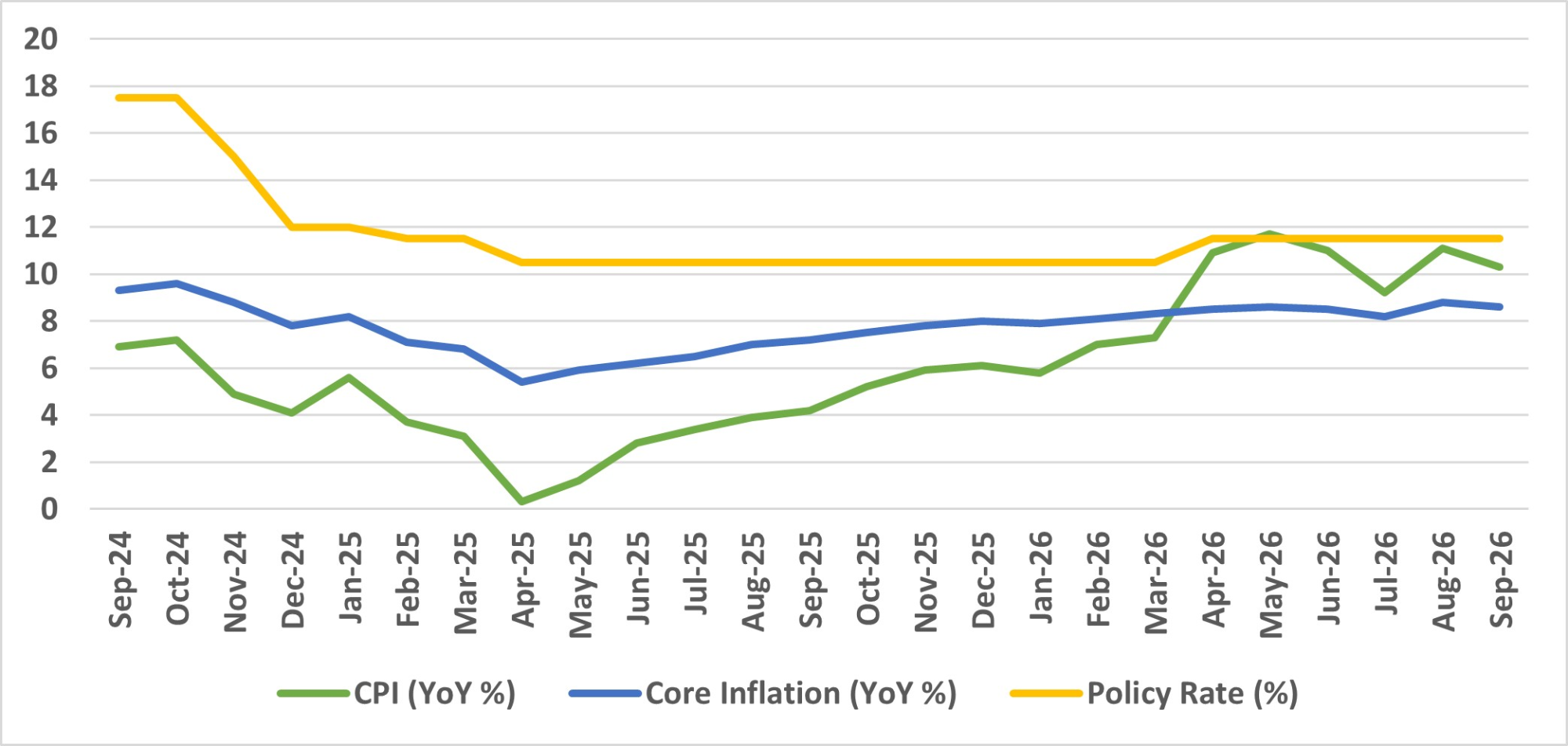
Bottom Line Up Front (BLUF): Pakistan Bureau of Statistics (PBS) released September inflation data on October 1. The inflation stood at 10.3% y/y down from 11.1% in August supported by decelerated food inflation in September. Monthly inflation remaining above 1%, surging to 1.3% in September and PPI accelerating to 13.3% y/y in September from 11.8% in August remained concerning. We continue to expect inflation to reach 11.0% in 2026, driven by higher energy and utility costs linked to the U.S.–Iran conflict, unless an unexpected credible truce is reached which is not major In-House view. Inflation is therefore very likely to remain well above the State Bank of Pakistan’s 5%–7% medium-term target range both in 2026 and 2027.
Figure 1: CPI, Core Inflation (YoY, % Change) and Policy Rate (%), September 2024 – September 2026
Source: IslamicMacro
Pakistan Bureau of Statistics (PBS) released September inflation data on October 1. The inflation stood at 10.3% y/y down from 11.1% recorded in August partly supported by decelerated food inflation in September. According to the PBS announcement, food inflation dropped sharply in September softening to 8.1% in urban areas (from 12.1%) and 7.7% in rural areas (from 13.2%). Despite food inflation plummeting, non-food inflation rose to 11.5% in urban areas and 13.1% in rural areas, maintaining pressure on household spending. The sectors which flamed the CPI up included annual the prices of transport (27.4% in September vs 20.2% in August) and housing and utilities (12.4% in September vs 8.9% in August)
On a m/m basis, the CPI increased by 1.3% in September compared to an increase of 1.2% in the previous month, which remained worrying since it remained above 1%. (Note: Core inflation eased slightly from 8.6% in September to 8.8% in August in urban areas while the rural rate declined to 8.1% from 8.5%). Additionally, wholesale price inflation accelerated to 13.3% y/y in September up from 11.8% in August, marking its highest level in five months.
Although headline inflation fell moderately in September, we foresee price pressures will remain through Q4 2026 and Q1 2027 unless an unexpected credible truce is reached in Iran which is not major In-House view. We think monthly inflation remaining above 1% combined with surging PPI will continue to pump up the domestic inflation.
We continue to expect inflation to reach 11.0% in 2026, driven by higher energy and utility costs linked to the U.S.–Iran conflict, unless an unexpected credible truce is reached which is not major In-House view. Inflation is therefore very likely to remain well above the State Bank of Pakistan’s 5%–7% medium-term target range both in 2026 and 2027.
Disclaimer: This publication is provided for general informational and macroeconomic research purposes only. It does not constitute individualized investment, financial, legal, tax or other professional advice. Forecasts, opinions and analysis reflect the author’s professional judgment at the time of publication and are not guarantees of future outcomes. See our full Risk & Legal Disclaimer and Terms & Conditions.
Analyst / Author Declaration: I, Volkan Sezgin, Independent Analyst and Researcher, declare that the views and conclusions expressed in this publication reflect my professional judgment at the time of publication and are presented in good faith. The analysis has been prepared independently and without improper influence or inducement. Where applicable, material conflicts of interest are disclosed. I observe applicable professional and internal compliance standards concerning confidentiality, independence and the responsible use of information.