
Turkiye PolEcon Insights (October 2026)
We present updated PolEcon Insights for Turkiye (October 2026)
We present updated PolEcon Insights for Turkiye (October 2026)
Risk Outlook:
 Source: IslamicMacro
Risk Outlook:
Source: IslamicMacro
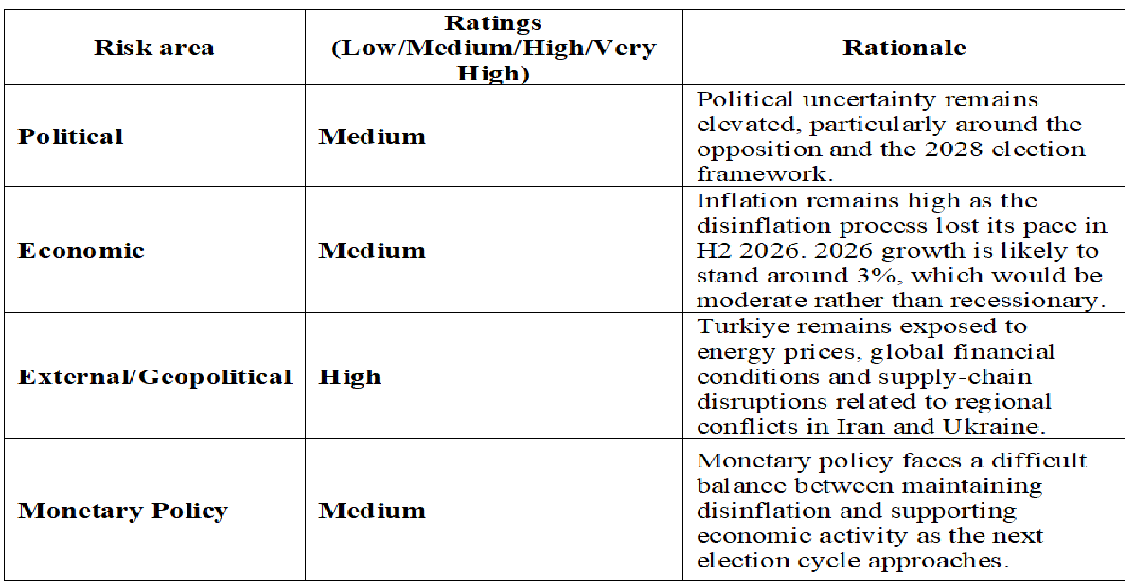
Turkiye’s political landscape remains active. First, for President Erdogan to seek another term under the current constitutional framework, the elections would need to be held earlier than scheduled (May 2028), likely in Q1 2028. Ankara Mayor Mansur Yavas remains a potential opposition candidate considering ongoing legal proceedings involving Istanbul Mayor Ekrem Imamoglu, which continues to add to political uncertainty in the country. This comes alongside structural realignments in Parliament after former CHP leader Ozgur Ozel formed the YENI Party, joined by 91 resigning MPs, which adjusted CHP’s seat total down to 44 as the fifth-largest party.
On the geopolitical side, Turkiye, Pakistan and Saudi Arabia signed the Makkah Joint Defence Agreement on August 7, under which an armed attack against one member is treated as an attack against all three. The agreement was moved into practical implementation on October 5 following renewed attacks against Saudi Arabia by Houthis while Turkiye has recently provided technical and defensive support to Saudi Arabia. (Note: We think the agreement is important for Turkiye’s regional positioning as it could improve Turkiye’s strategic role in the Gulf and Middle East).
On the economic front, the picture remains mixed. September inflation print was encouraging, with annual CPI easing to 29.7% from 31.5% in August. However, monthly inflation remained relatively high at 1.9%. The disinflation process is continuing, but domestic price pressures remain significant, partly linked with higher energy prices and regional tensions. We foresee growth is also likely to remain moderate. We expect real GDP growth to be around 3% in 2026, somewhat below the IMF’s 3.4% projection, as tighter financial conditions and the ongoing economic rebalancing weigh on domestic demand. We think that there should be room for monetary easing in 2027 if the disinflation process continues and external shocks remain contained which would depend on whether the conflict involving Iran subsides.
Disclaimer: This publication is provided for general informational and macroeconomic research purposes only. It does not constitute individualized investment, financial, legal, tax or other professional advice. Forecasts, opinions and analysis reflect the author’s professional judgment at the time of publication and are not guarantees of future outcomes. See our full Risk & Legal Disclaimer and Terms & Conditions.
Analyst / Author Declaration: I, Volkan Sezgin, Independent Analyst and Researcher, declare that the views and conclusions expressed in this publication reflect my professional judgment at the time of publication and are presented in good faith. The analysis has been prepared independently and without improper influence or inducement. Where applicable, material conflicts of interest are disclosed. I observe applicable professional and internal compliance standards concerning confidentiality, independence and the responsible use of information.